

Olga is a mechanical engineer by background with over 20 years of diverse experience in innovative research and development leadership across academia, government, manufacturing and the mining industries. She currently serves as Head of Strategic Partnerships and Business Development at Mining One Consultants and Cavroc, where she leads the development of long-term business relationships and drives sustainable business growth.
She has held senior roles at CSIRO and Amira Global, where she leveraged her extensive global network, project management skills and a strong track record in delivering multimillion-dollar collaborative R&D programs – from concept to commercialisation – to create value for the resources sector and its research partners. Olga is a driver of business growth, operational optimisation and stakeholder value, drawing on her strategic thinking, advanced problem-solving skills, and strong business acumen.
By Olga Verezub, Head of Strategic Partnerships and Business Development, Mining One Consultants
Executive Summary
In mining geotechnical engineering, experience, site knowledge and engineering judgement still do the heavy lifting. However, engineering analysis platforms are becoming more powerful and accessible every year, so the question is no longer whether complex ground behaviour can be assessed. It is whether we are using these capabilities to challenge assumptions, clarify decisions and deliver safer, more practical designs.
That idea sits at the heart of the long-standing collaboration between Mining One Consultants and Cavroc. Together, the two organisations have focused on making advanced geotechnical analysis more practical, transparent and useful for real mine design decisions. The point is not to produce a pretty picture or a more complicated assessment. It is to help engineers test their thinking, understand the likely ground response, and make better decisions with greater confidence.
From Pretty Pictures to Better Engineering Decisions
Too often, advanced engineering analysis is treated as a visualisation exercise: polished stress plots, colourful contours and slick animations. These outputs can look convincing, but unless they are grounded in engineering logic, site experience and a clear understanding of the design problem, they do little to improve the decision.
Mining One and Cavroc take a different approach.
By bringing Cavroc’s advanced analysis capability into Mining One’s established geotechnical workflow, the model becomes a tool for decision support for mining engineers, not an end in itself. It’s built on empirical understanding, checked against real geomechanical behaviour and used to test what the rock mass is likely to do. The outcome isn’t “more modelling”, it’s better insight.
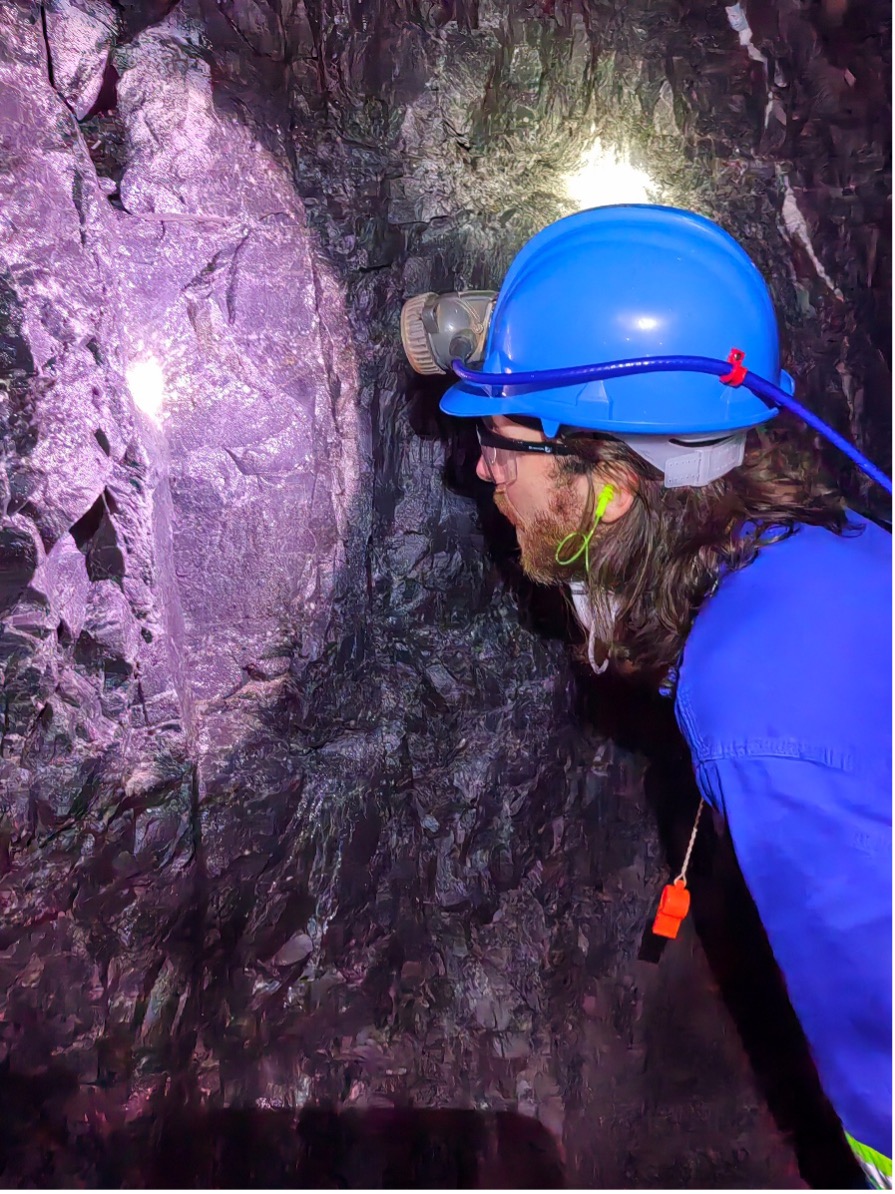
The picture is the credit to Mining One’s geologist Louis Cohalan
What integration looks like in practice
In day-to-day work, this integrated approach supports engineers across the design lifecycle. It helps teams test assumptions, explore likely ground responses and compare design options before decisions become costly or difficult to reverse.
For example, it allows engineers to:
- Explore complex ground behaviour before it becomes visible in operations. Engineers can investigate potential failure mechanisms, stress paths and interaction effects that may not yet be observable underground, but are physically plausible.
- Understand stress redistribution and deformation around excavations. Seeing how stress and displacement may evolve as mining progresses enables proactive design adjustments rather than reactive remediation.
- Compare design scenarios with greater confidence. Rather than relying on a single assumption or one preferred case, engineers can evaluate multiple options, understand sensitivities and test how robust a design is under different conditions.
- Challenge and refine empirical assumptions. Decades of operational experience remain essential, but advanced analysis provides a way to test, calibrate and improve those assumptions against expected rock mass behaviour.
Just as importantly, the output is not treated as “the answer”. It is treated as a working hypothesis: reviewed, challenged and refined by engineers who understand both the power of the tools and where they can mislead. That is where the Mining One and Cavroc collaboration adds real value — combining practical mine design experience with a platform that helps engineers think more clearly, ask better questions and make more confident decisions.
Experience enhanced by better insight
The message is simple: technology does not replace experience. It should sharpen it.
Used well, advanced engineering analysis gives experienced engineers a clearer lens on rock mass response. It helps them test assumptions, identify risks earlier and put more structure around uncertainty, without stepping away from engineering judgement.
When applied properly, it makes the path forward easier to see. It supports more confident design choices, improves visibility of risk and helps teams forecast performance over the life of a mine. The value is not in replacing the engineer’s judgement, but in giving that judgement a stronger foundation.
A better way to bring technology into engineering practice
More broadly, the Mining One and Cavroc collaboration reflects a shift in how technology creates value in mining engineering. It works best when it is not treated as a separate technical exercise, but as part of the way engineers think through design problems.
That means:
- advanced capability embedded within established engineering workflows;
- analysis grounded in geological, geotechnical and operational reality; and
- outputs interpreted through experience and site knowledge, rather than accepted at face value.
This avoids the false choice between traditional engineering and modern analytics. Good geotechnical design needs both: practical experience, fit-for-purpose data and a sound understanding of what is happening in the ground.
The outcome? More confident engineering decisions
When advanced analysis is aligned with engineering expertise, the benefits become tangible:
- More robust designs that account for realistic ground response;
- Earlier visibility of site-specific risks, allowing teams to act before problems become costly; and,
- Decisions grounded in both empirical knowledge and a clearer understanding of the mechanisms driving rock mass behaviour.
When technology and engineering judgement are brought together in this way, the value is not simply better outputs, it is better decisions for the industry, that represents a more mature and useful approach; one where technology strengthens practical engineering, improves confidence in design choices and helps mines plan with greater clarity.
Summary
As mines go deeper and conditions become more complex, constrained and uncertain, the need for informed, defensible decisions will only increase. The way forward is not technology for its own sake. It is closer collaboration between experienced engineers, site teams and the specialists developing the tools that support better engineering thinking.
The Mining One and Cavroc partnership shows what is possible when advanced analysis is embedded within real geotechnical practice. It becomes an extension of expertise: a way to test assumptions, challenge standard thinking, understand risk earlier and make stronger design decisions.
That is how technology earns its place in modern mining engineering: not by replacing judgement, but by strengthening it.
