.png)
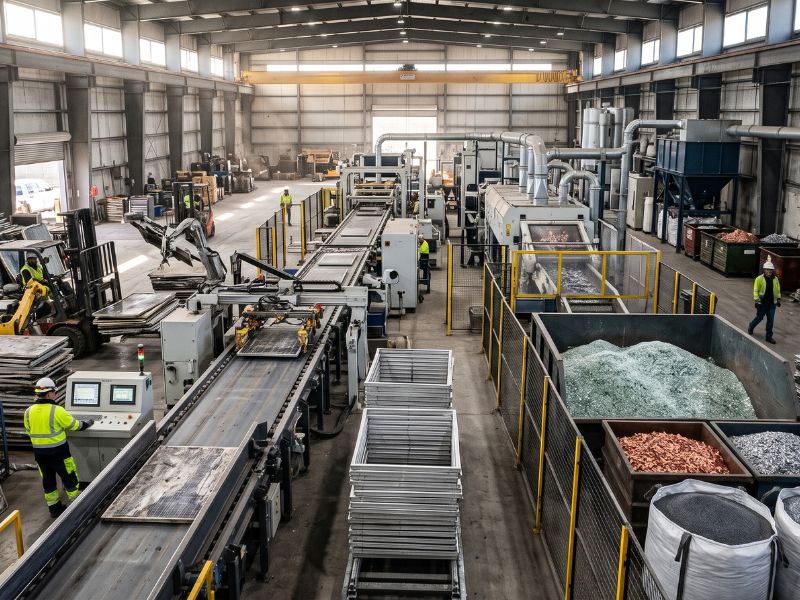
A planned Texas recycling facility aims to recover up to 96% of retired solar panel materials, creating new opportunities for resource recovery and a more sustainable solar industry
Dallas, Texas, 24 November 2026 – Solar energy has become an important part of the global shift toward cleaner power. As more homes, businesses, and industries install solar panels, another challenge is beginning to emerge: what happens when these panels reach the end of their working life? A new recycling project planned in Texas aims to address this issue by recovering valuable materials from retired solar panels and returning them to the manufacturing supply chain.
We Recycle Solar, a company based in Yuma, Arizona, plans to establish a 10-acre recycling facility outside Dallas. The project is expected to begin operations in the third quarter of 2027. The company aims to recover up to 96% of the materials in each solar panel through a specialized recycling process that will take place entirely within the United States.
The proposed facility will focus on extracting materials such as silver, copper, silicon, aluminum, and glass. These resources are used in several industries, including electronics manufacturing, solar equipment production, and electricity grid infrastructure. According to the company, its technology will be capable of processing one solar panel every minute.
Recovering these materials is not a simple task. Solar panels contain small quantities of valuable resources, particularly silver, copper, and silicon, which can be difficult and expensive to separate. Traditional recycling methods often concentrate on recovering glass and aluminum frames because they account for much of a panel's total weight. As a result, several high-value materials may not be fully recovered.
The Texas project aims to change this approach by using a process designed to recover a wider range of materials without sending them overseas for additional smelting. This could help keep more resources within domestic supply chains while reducing dependence on newly mined materials.
The need for solar panel recycling is expected to grow over the coming years. Most solar panels have an operating life of approximately 25 to 35 years. As installations made during earlier periods begin reaching retirement age, the volume of discarded panels is likely to increase. Weather damage, installation problems, and upgrades to more efficient technology may also contribute to the growing number of retired panels.
For recycling businesses, recovering valuable materials could improve the financial case for processing old panels. In the United States, recycling solar panels generally costs more than sending them to landfills. However, extracting materials that can be sold to manufacturers may help reduce this cost difference.
We Recycle Solar already operates in panel decommissioning, recycling, resale, and remarketing. The company reports that its existing activities have kept more than one million solar panels out of landfills. The planned Texas facility is expected to support a wider expansion of its recycling operations.
The company also plans to invest approximately $100 million in four additional facilities across the United States within four years, although their locations have not yet been announced.
As solar energy adoption continues to expand, managing retired equipment will become an important part of the industry's long-term development. Projects focused on solar panel recycling can help reduce waste, recover valuable resources, and support a more circular economy. The planned Texas facility represents a step toward making renewable energy more sustainable throughout its entire lifecycle.





Latest News




At Metals Mining Business Outlook Magazine, we recognize the critical role that the metals and mining industry plays in the global economy. From exploration and extraction to processing and sustainability, our content covers every facet of the industry.
We respect your privacy. The email address you provide will be used solely for subscription purposes and will not be stored or shared.
Subscribe Now
