.png)


Mining has made real progress on safety. In 2025, ICMM member companies recorded their lowest recordable injury rate yet: 2.21 per million hours worked. Fatalities fell too, from 43 in 2024 to 39. That progress is the result of years of work by crews, safety teams and leaders across the industry.
Every one of those 39 lives still matters, and ICMM's 2025 safety benchmarking report points to where the next gains will come from. It finds no consistent link between injury rates and fatality rates. The measure we have worked so hard to improve shows how far we have come. On its own, it cannot show us where serious risk sits.
That gives leaders a clear opportunity. We already count what went wrong. By also counting what we ask of people, we can reduce fatal risk at its source.
What Incident Rates Cannot See
An incident rate counts the moments when controls failed. It says nothing about how often those controls were needed. Two plants can post the same injury rate and be very different places to work. In one, a fitter climbs to a piece of equipment or isolates it once a quarter. In the other, it happens every week. The second plant relies on its controls far more often, and each time is a chance for them to fail.
ICMM's figures show how often they do. Ineffective control execution was found in 19 of the 26 fatal incidents it could classify. Three hazards, working at height, mobile equipment and energy isolation, caused 71.4% of fatal incidents. Process areas such as milling and leaching plants accounted for nine fatalities, 23% of the total, and working at height incidents happened most often in those areas. Contractors accounted for 27 of the 39 deaths.
These are the hazards of intervention: the moments when people isolate equipment, climb to it, open it and work on it. Before I became CEO, I led our service business, and service is where these moments happen. Leaders rightly ask how well each intervention is controlled. The question I want my peers to ask is how many we need at all.
That is exposure: how often people have to be near hazardous equipment.
Exposure Is Decided in the Boardroom
Most of a plant's exposure is fixed before the first tonne of ore goes through it. It is set when the flowsheet is drawn, when equipment is chosen, when maintainability is weighed against capital cost, and when the maintenance strategy and the crews to deliver it are agreed. A liner change that keeps a crew inside a mill for days. A component that can only be inspected from height. A calendar that sends people to check equipment that is running fine. Each was decided at a desk, often years earlier, by people who will never stand next to that equipment.
The industry's own risk agenda points this way. In EY's survey of 500 senior mining executives for its 2026 business risks and opportunities report, operational complexity tops the list. EY warns that maintenance discipline is slipping and that silos between operations and asset management can undermine safety, and it recommends moving from calendar-based to condition-based maintenance.
I would go further. That shift is usually justified on cost. It should be justified on exposure. Every check a sensor makes instead of a person is a walk to the equipment that nobody has to make.
The Levers Leaders Hold
The first lever is equipment designed for fewer and safer interventions. Longer wear life means fewer changeouts. Parts replaced without entering the machine, access designed in rather than scaffolded on, and isolation points that are easy to verify all cut time spent in harm's way. These choices are made at specification, where they cost least.
The second is maintenance driven by condition rather than the calendar. Crews intervene when the equipment needs it and stay away when it does not. Fewer unplanned breakdowns also means fewer rushed repairs, which are where controls are most often skipped.
The third is remote monitoring that people trust enough to act on. Monitoring reduces exposure only when its data changes who goes near the equipment. If a site still sends someone to confirm what the sensor reported, it has added a screen without removing a visit. EY observes that many mining AI pilots sit in health and safety, but few scale. I would judge them by the visits they remove, not the pilots they start.
From Measure to Action
Hours of exposure to hazardous intervention can be counted, and what can be counted can be managed. Every leader in our industry can start at their next board meeting.
First, report it. Put exposure in the board pack beside the injury rate, and set a target to reduce it.
Second, build it into investment. Make exposure part of every capital approval, so the cost of each future entry, climb and isolation is weighed alongside price and throughput.
Third, ask suppliers for it. Require them to state how many interventions their equipment needs, how long each takes and under what isolation, and to stand behind those figures across the life of the plant.
None of these steps replaces making each intervention safe. They mean fewer interventions need to be made safe in the first place.
At FLS, we are applying the same test to our own equipment. [Example we can share.] We design much of the exposure our customers' crews live with, and we want our customers to hold us to the numbers.
The injury rate will keep falling, and it should. The next step is to reduce how often we ask people to stand next to danger. Leaders set that number. Together, we can start lowering it now.
About the Author
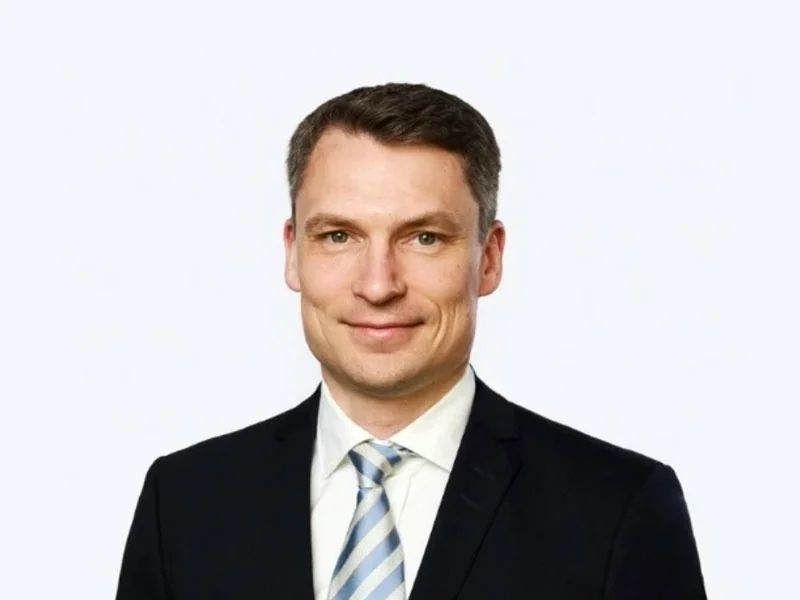
Toni Laaksonen is CEO of FLS. He joined the company in June 2025 as Service Business Line President and was appointed CEO in February 2026. Before FLS, he was President and CEO of Glaston Corporation. At Metso, his roles included Senior Vice President of the Materials Processing business line and McCloskey, Vice President of the Parallel High-End Aggregates business line, and Global Sales Director for Performance Services.